


Treating Localized Kidney Cancer
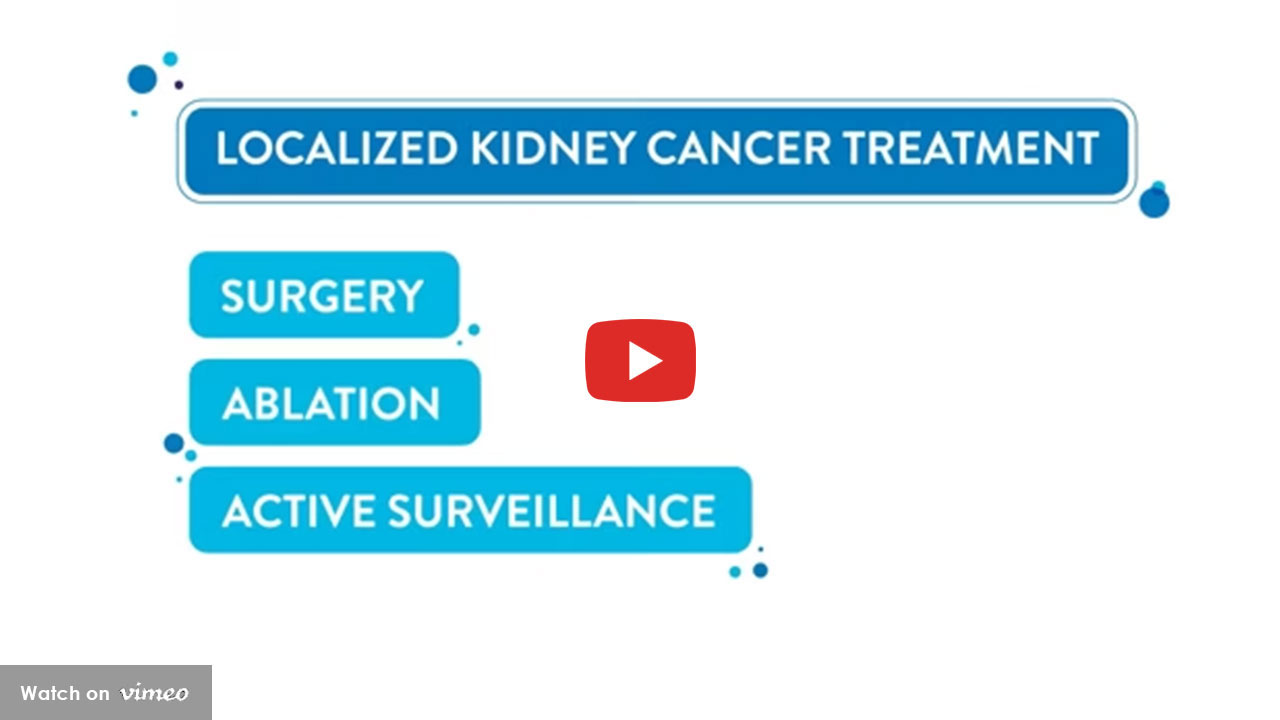
Localized kidney tumors may be treated with surgery or ablation. For very small tumors, active surveillance by your medical team also may be an option.
Your doctors may refer to the tumor(s) in your kidney as “localized kidney cancer.”
Kidney cancer (renal cell carcinoma or RCC) is considered “localized” when:
- It’s Stage I, II or III
- The tumor(s) are located within the kidney walls
- Cancer has not spread to lymph nodes or other organs
Surgery
Surgery is the most common treatment for localized kidney cancer. When cancer is contained to the kidney, surgery may be successful in curing your cancer without needing any additional treatment.
Thanks to today’s advanced robotic surgery and imaging technology, surgeons can remove kidney tumors with excellent margins – meaning there is no cancer left. For small tumors, surgeons can even remove tumors without taking your entire kidney. That helps preserve your kidney function and provides a better long-term quality of life.
Learn more about Surgery for Kidney Cancer
Ablation
For some people, surgery may not be an option. If you can’t have surgery, ablation may be recommended to destroy or reduce the size of a kidney tumor. Ablation can be performed by your kidney surgeon or an interventional radiologist.
A thin, hollow probe is inserted through the skin. The probe is guided to the tumor using ultrasound, CT or MRI imaging. Hot or cold therapy is passed through the probe. Because it’s done under image guidance, ablation is highly targeted with little damage to surrounding healthy tissue.
There are two kinds of ablation:
- Radiofrequency ablation (RFA): High-energy radio waves heat and destroy cancer cells.
- Cryoablation: Extremely cold gases destroy cancer cells.
Active Surveillance
Not all kidney cancers act the same. Some types are not as aggressive or likely to spread. Thanks to today’s advanced diagnostics, your medical team can tell if your cancer is lower risk. If so, we may recommend active surveillance.
What is active surveillance?
Active surveillance means you defer treatment and its possible risks and side effects. Treatment is always an option if your cancer changes.
When would I choose active surveillance?
If you have a small tumor, your cancer has not spread, you have a health condition that prevents you from having surgery/treatment, or side effects of treatment are more harmful than the cancer itself.
How do I know if my cancer is getting worse?
You will have regular testing – including CT, MRI or ultrasound imaging – to monitor your tumor for changes.